


PREVIOUS
THE JOURNAL
Artist Trading Cards: Small Art Made to Leave Home
November 17, 2026
I have a sheet of cold-pressed watercolor paper with nine creatures still on it, and a clean edge where nine more used to be. The full set includes an eyeball tethered to its neighbors by nerves and blood vessels that stretch into arms, then wires. Somewhere in there is a hand gripping a body made of clove-studded ham, and an onion with a tongue pushing in from either side.
The missing nine are already artist trading cards. The rest are waiting on paint and a pair of scissors.
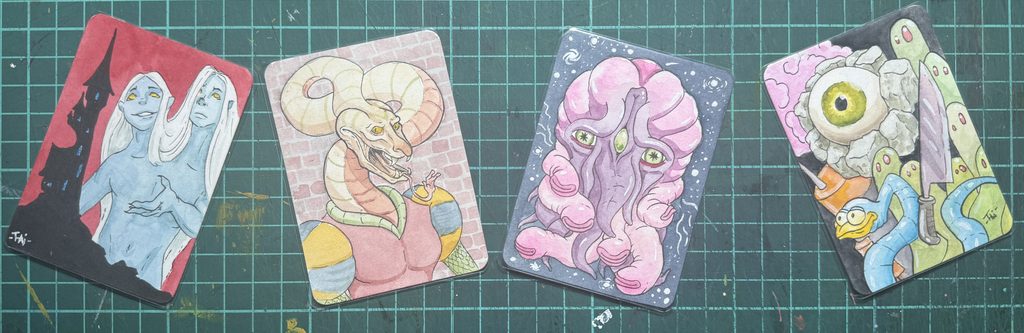
Artist trading cards, or ATCs, are original pieces of art made at 2.5 by 3.5 inches, the size of a playing card. They're made to be traded, not sold. I haven't traded a single one yet, but they've already changed how I work, mostly by being too small to overthink and too numerous to hoard.
Cards, art, and other people
I found ATCs on YouTube, and they landed on three things I already cared about. I've always been drawn to cards. I make art. And the whole format exists to put that art in someone else's hands, so it brings people together almost by design.
It helped that the barrier is low. A card is small, it's meant to be made in batches, and nobody expects a masterpiece on something that fits in a shirt pocket. The stakes are about the size of the card.
Eighteen cards, one creature web
My first attempt wasn't small, which was maybe the point. I measured out a large sheet of watercolor paper so it would cut into 18 cards, then sketched an odd creature centered in each space. Every one connects to its neighbors through limbs, appendages, and anything else that could reach across a border.
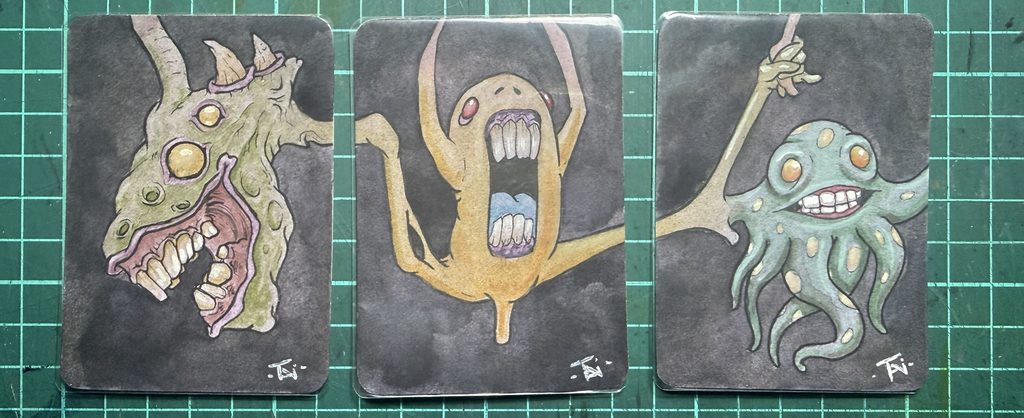
The connections are meant to survive the cutting. If two collectors ever run into each other and hold their cards side by side, the creatures will still be reaching for one another. The world holds together even after it's been scattered.
I wanted a photo of the whole sheet before I cut it. Travel decided otherwise. I needed to pack it without ruining it, so the first nine became finished cards and the second nine are still one piece.
Big pieces come with their own kind of dread. Sometimes the fear of a mistake grows as the work comes together, because there's more to lose. Other times an existing mistake is what stalls you, since finishing means either tedious repair or admitting the piece is ruined.
This sheet is the first kind. That's the better problem to have.
What a small card does
Since that sheet, I've made about 15 more, ranging from monsters to portraits to doodle collages. The size is what keeps them moving. A card that small forces you onto a single subject, then makes you tighten the story around it.
There's no room for a background that wanders or a second idea angling for attention. You pick the thing and commit. The constraint makes the first decision for you, and the first decision is usually the one that stalls everything else.
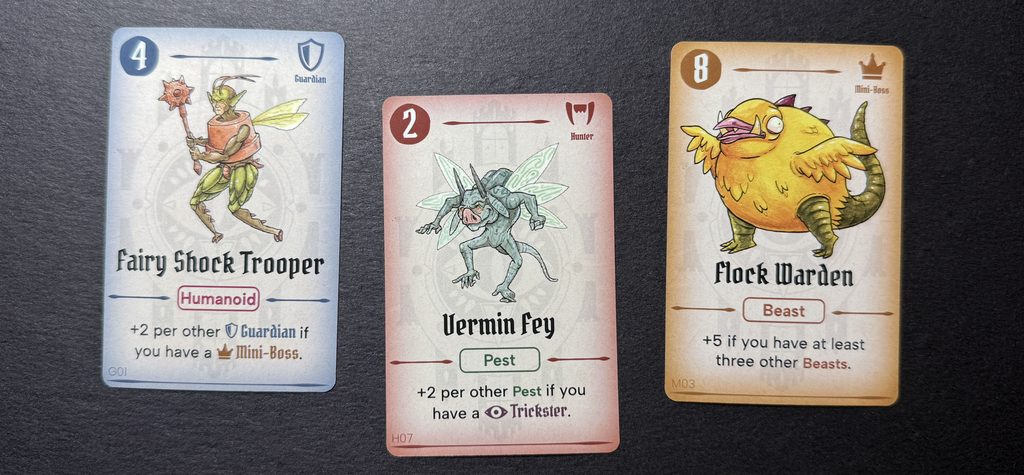
I've made other card-related art lately, and ATCs feel distinct from all of it. Each one only has to be itself.
The hard part is letting go
I've been reluctant to part with my work for years. When I finish something, I tend to just stare at it. It feels less like an accomplishment and more like a small miracle I happened to take part in.
That's not a claim about my art. I'd say the same about any act of making. Teaching gave me a version of the feeling: watching students experience something for the first time felt like a glimpse of what parents must get every day in those early years.
Each piece also holds onto its moment. I can usually recall where I was when I made something and what surrounded it, so giving a piece away means handing over a bit of that memory too.
So ATCs are partly practice. In a format built around trading, letting go is the whole premise. I don't need anyone to value a card the way I do, and honestly, I'd prefer they didn't.
I'd just like to imagine where each one finds a home. Ideally not a waste bin.
Make your first one tonight
You don't need special paper or a template. Grab a poker card, a Magic card, or a Pokémon card and trace around it. That rectangle is your canvas.
Fill it with whatever you feel like making. Draw, paint, collage, stamp, then cut it out. It all counts.
The traced shape does the deciding for you. Size and scope are already settled, so the only question left is what goes in the box, and that one is small enough to answer tonight.
What's next
I have about 40 cards nearly finished, and I'm aiming for 100 by the end of the year. Once the stack is real, they're going into a binder of trade offers I can carry anywhere and see what happens.
I've also floated a trading event to some of the artists at Lei Gallery, something that could pull in card-makers from all over. It came up at an opening, and I still need to circle back. If it comes together, you'll hear about it here first.
Until then, make one. Keep it if you need to. Then make a second one, because that one's for trading.